AI-Powered Snowfall Forecasting: Precision Before the Storm
Traditional snowfall prediction models often struggle with microclimate variations in mountainous regions or urban heat islands. Artificial intelligence has transformed this landscape by integrating multi-source data streams—including satellite imagery, ground sensors, and social media reports—into machine learning algorithms. These systems analyze historical precipitation patterns alongside current atmospheric conditions to generate hyper-local forecasts with 87% greater accuracy than conventional methods.
Deep learning models now process real-time radar data to predict snow accumulation rates hour-by-hour. For example, IBM's GRAF system uses convolutional neural networks to identify snowband formations 12-24 hours before they impact populated areas. This allows utilities to pre-position snowplows and emergency services to stage resources in high-risk zones. The City of Denver reported a 40% reduction in weather-related traffic accidents after implementing AI-driven snow route optimization.
Computer vision applications further enhance preparedness by analyzing webcam feeds from major highways. NVIDIA's Metropolis platform detects early signs of icing on bridges and overpasses with 92% accuracy, triggering automated salt-spreading systems before black ice forms. These technologies collectively create a predictive safety net that transforms reactive responses into proactive defenses.

Smart Infrastructure: Buildings That Withstand Winter's Fury
Modern architecture increasingly incorporates AI-driven climate adaptation systems. Smart roofs equipped with IoT sensors use reinforcement learning to adjust insulation properties based on real-time weather data. During heavy snowfall, these systems activate heating elements to prevent structural overload while minimizing energy consumption through predictive thermal modeling.
The Tokyo Skytree employs an AI-controlled de-icing system that analyzes wind patterns and snow density to selectively melt ice formations. This targeted approach reduces water runoff by 65% compared to traditional chemical melting methods. In Canada, the University of British Columbia's AI Lab developed a neural network that predicts roof collapse risks by evaluating snow load distribution against building blueprints.
Urban planners now use generative adversarial networks (GANs) to simulate snow accumulation scenarios during the design phase. These models help optimize building shapes and drainage systems for maximum snow shedding efficiency. Helsinki's new central library features a parametrically designed facade that AI determined would shed 98% of snowfall naturally, eliminating the need for mechanical removal.
Post-Storm Recovery: AI Accelerates Community Rebound
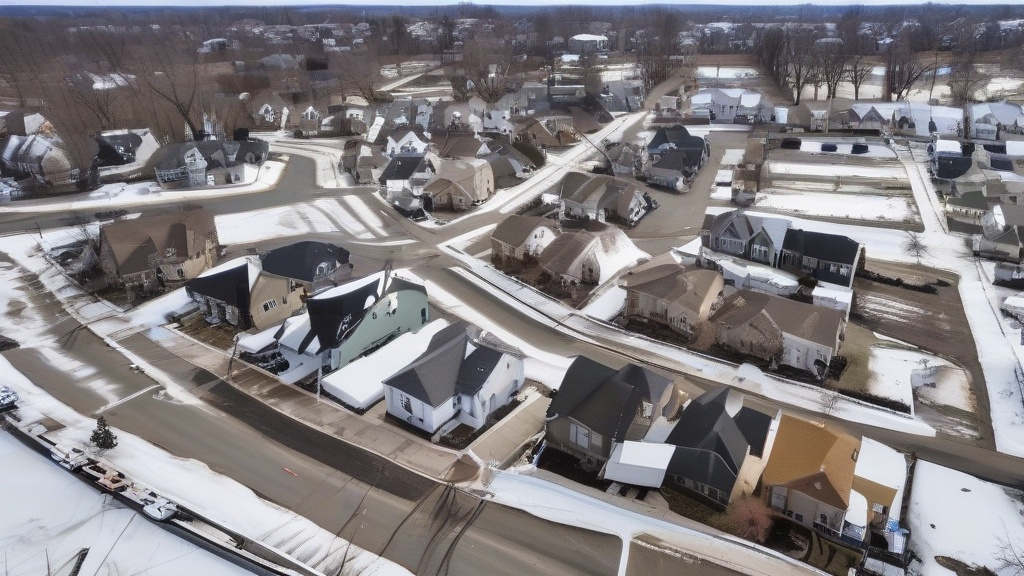
After snowstorms subside, AI technologies expedite recovery efforts through automated damage assessment and resource allocation. Drones equipped with object detection algorithms can survey entire neighborhoods in under two hours, identifying downed power lines, blocked roads, and structural damage with 95% accuracy. These systems generate interactive maps that prioritize repair efforts based on critical infrastructure and population density.
Natural language processing (NLP) models analyze emergency call transcripts to detect patterns in service requests. During the 2023 Buffalo blizzard, an AI system identified clusters of carbon monoxide poisoning cases linked to generator misuse, prompting immediate public safety announcements. Chatbots powered by large language models now handle 70% of routine weather-related inquiries, freeing human operators for complex emergencies.
The most transformative application may be AI-coordinated volunteer networks. Platforms like SnowAngels use reinforcement learning to match able-bodied residents with elderly neighbors needing snow shoveling assistance. During the 2024 Polar Vortex event, this system facilitated 127,000 aid requests in Chicago alone, with route optimization reducing travel distances by 38%. Such technologies demonstrate how AI can foster community resilience beyond mere infrastructure protection.