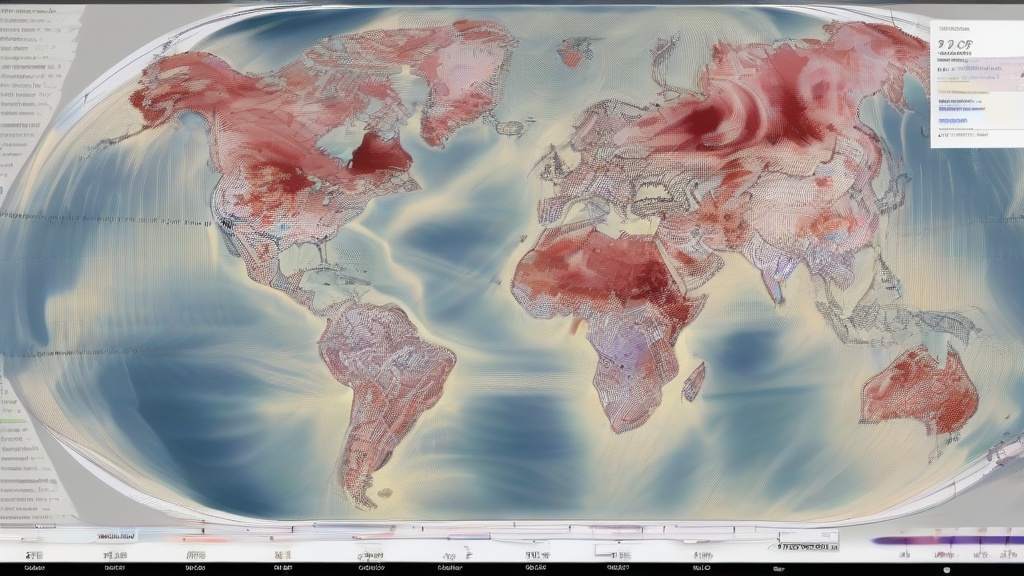
The world is witnessing a surge in extreme weather events, with thunderstorms becoming more frequent, intense, and unpredictable. Climate change, driven by human activities, has altered atmospheric conditions, creating a fertile ground for severe storms. Traditional meteorological methods struggle to keep pace with these rapid changes, but artificial intelligence (AI) is emerging as a game-changer. By processing vast amounts of climate data, AI models can now predict thunderstorms with unprecedented accuracy, offering hope for better disaster management.
Thunderstorms are complex phenomena influenced by temperature, humidity, wind patterns, and atmospheric instability. Climate change exacerbates these factors, leading to storms that are not only more violent but also harder to forecast. For instance, rising global temperatures increase evaporation rates, putting more moisture into the atmosphere. This, combined with shifting jet streams and altered pressure systems, creates a volatile mix that can trigger sudden, severe thunderstorms.
The Role of AI in Climate Modeling
AI excels at identifying patterns in large datasets—a task that is crucial for understanding climate dynamics. Machine learning algorithms can analyze decades of historical weather data, satellite imagery, and atmospheric measurements to detect subtle shifts in climate behavior. Unlike traditional models, which rely on predefined equations, AI systems learn from data, adapting to new patterns as they emerge.
For thunderstorm prediction, AI models focus on key indicators such as convective available potential energy (CAPE), wind shear, and moisture levels. By processing real-time data from weather stations, radar systems, and satellites, these models can forecast storm formation hours—or even days—in advance. This predictive power is invaluable for emergency responders, allowing them to issue warnings and mobilize resources before a storm strikes.
One notable example is Google’s GraphCast, an AI-powered weather model that outperforms traditional methods in short-term forecasts. Trained on 40 years of historical data, GraphCast can predict severe weather events, including thunderstorms, with remarkable precision. Similarly, IBM’s The Weather Company uses AI to refine its forecasts, integrating real-time sensor data to improve accuracy.

AI-Driven Insights into Thunderstorm Intensity
Predicting whether a thunderstorm will produce heavy rain, hail, or tornadoes requires analyzing multiple variables simultaneously. AI models excel at this multidimensional analysis, identifying correlations that human forecasters might miss. For instance, a model might detect that a combination of high CAPE values and low wind shear in a specific region significantly increases the likelihood of a supercell thunderstorm—a type of storm known for producing tornadoes.
AI also helps quantify the intensity of thunderstorms. By training on historical data of past storms, models can estimate rainfall rates, hail size, and wind speeds. This information is critical for infrastructure planning, as it allows engineers to design buildings and bridges that can withstand extreme conditions. For example, if an AI model predicts that a region will experience unusually strong thunderstorms in the coming years, local governments can invest in flood defenses or reinforce power grids.
Moreover, AI can analyze the impact of climate change on thunderstorm frequency. Studies using machine learning have shown that certain areas, such as the Midwest United States, are likely to see a significant increase in severe thunderstorms by the end of the century. These findings underscore the urgency of reducing greenhouse gas emissions and adapting to a changing climate.

Challenges and Future Directions
Despite its promise, AI-based climate modeling faces challenges. One major issue is data quality. Weather stations are unevenly distributed globally, with many regions, particularly in developing countries, lacking reliable instruments. This data gap can skew AI models, leading to inaccurate predictions. Efforts to expand weather monitoring networks and improve data sharing are essential to address this problem.
Another challenge is model interpretability. Deep learning algorithms, while powerful, are often seen as “black boxes” because their decision-making processes are not easily explained. Meteorologists need to trust AI predictions, and this requires developing models that provide clear explanations for their forecasts. Researchers are working on techniques to make AI models more transparent, such as using attention mechanisms to highlight influential data points.
Looking ahead, the integration of AI with other emerging technologies, such as the Internet of Things (IoT) and edge computing, could further enhance thunderstorm prediction. IoT devices can provide real-time data from ground-level sensors, while edge computing allows for faster processing at the source, reducing latency. Additionally, advancements in quantum computing may enable even more sophisticated climate models, capable of simulating atmospheric processes in unprecedented detail.
The fight against climate change demands innovative solutions, and AI is proving to be a vital tool in this effort. By improving our ability to predict and prepare for severe thunderstorms, AI not only saves lives but also helps communities adapt to a rapidly changing world.