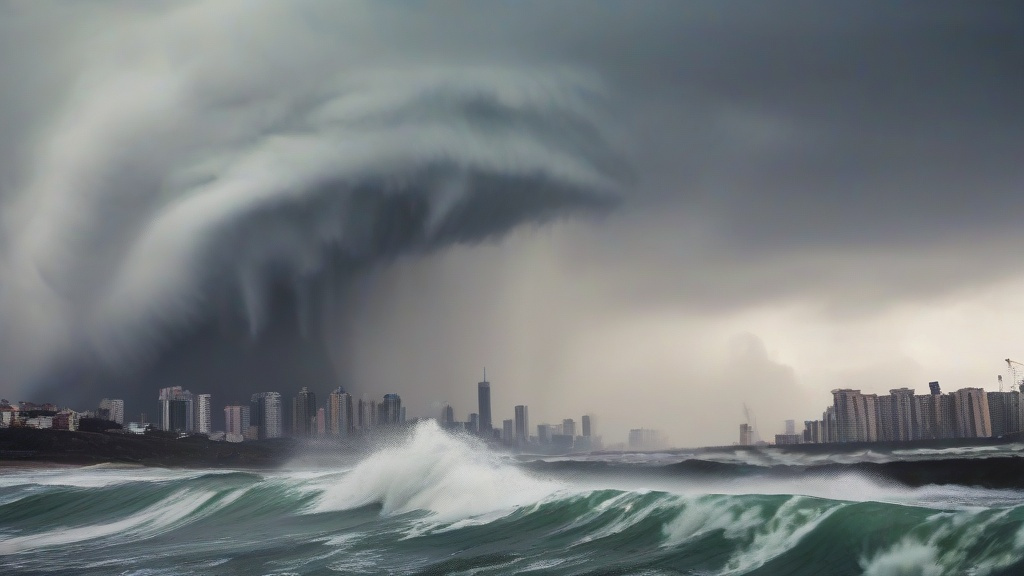
The planet is witnessing a dramatic escalation in extreme weather events, with typhoons and heatwaves emerging as twin symbols of climate change’s growing power. These phenomena, once considered isolated threats, now interact in ways that amplify their destructive potential. Scientists warn that rising global temperatures are altering atmospheric and oceanic systems, creating a feedback loop where warmer seas fuel stronger storms, and prolonged heatwaves exacerbate drought conditions. This article examines the scientific mechanisms behind these changes, their cascading impacts on human societies, and the urgent need for adaptive strategies.
Typhoon Intensity: How Warmer Oceans Supercharge Storms
Typhoons—the Pacific Ocean’s version of hurricanes—derive their energy from warm ocean surfaces. As greenhouse gas emissions trap heat in Earth’s climate system, sea surface temperatures have risen by approximately 0.13°C per decade since 1901. This additional thermal energy acts as fuel for tropical cyclones, enabling them to intensify rapidly. A 2020 study in Nature Geoscience found that typhoons forming over exceptionally warm waters now reach Category 4 or 5 status 25% more frequently than in the 1970s.
The Philippines, located in the northwest Pacific’s typhoon belt, provides stark evidence of this trend. In 2023, Super Typhoon Rai struck with winds exceeding 195 km/h, destroying 1.5 million homes and displacing 4 million people. Satellite imagery revealed the storm’s eye wall contracting to just 20 kilometers in diameter—a sign of explosive intensification linked to ocean heat content. Climate models project that by 2100, the proportion of Category 5 typhoons could double under current emission trajectories.
This intensification creates compounding risks. Stronger winds generate higher storm surges, while increased precipitation leads to catastrophic flooding. In Japan, Typhoon Hagibis (2019) dropped 900 millimeters of rain in 24 hours, overwhelming flood defenses designed for historical precipitation patterns. Such events underscore how climate change is rendering existing infrastructure obsolete.

Heatwave Extremes: When Scorching Temperatures Become Deadly
While typhoons dominate headlines during their brief but violent passages, heatwaves quietly claim more lives annually. The World Health Organization estimates that between 1998–2017, more than 166,000 people died from heat-related causes. Climate change has shifted the probability distribution of temperatures, making extreme heat events 30 times more likely today than in pre-industrial times.
The 2021 Pacific Northwest heat dome exemplifies this new reality. Temperatures in Portland, Oregon, reached 46.7°C—shattering previous records by 5°C. Emergency rooms reported a 69-fold increase in heat-related illnesses, while roads buckled and power cables melted. Research published in Nature Climate Change attributed 90% of this event’s severity to human-caused warming.
Urban areas face amplified risks due to the urban heat island effect. Cities with dense infrastructure and limited green space can be 5–10°C hotter than surrounding regions. During India’s 2022 heatwave, Delhi recorded 49°C temperatures, triggering widespread power outages as air conditioner use surged. Vulnerable populations—the elderly, outdoor workers, and low-income communities without cooling access—suffer disproportionately. A 2023 Lancet study found that heat exposure reduced global labor productivity by an estimated 470 billion hours in 2021 alone.

The Interconnected Crisis: When Typhoons Meet Heatwaves
The relationship between typhoons and heatwaves extends beyond temporal coincidence. Prolonged heatwaves often precede major storms, creating conditions ripe for disaster. Before Typhoon Merbok struck Alaska in 2022, the region had endured weeks of abnormal warmth that melted sea ice and weakened permafrost. When the storm arrived, its storm surge eroded coastlines already destabilized by thawing ground, causing $140 million in damages to indigenous communities.
Post-typhoon heatwaves present another layer of complexity. After Super Typhoon Rai, the Philippines experienced temperatures exceeding 35°C combined with 90% humidity—a lethal combination for survivors without electricity or clean water. Disease outbreaks became inevitable as stagnant floodwaters mixed with sewage under baking sun.
Adaptation strategies must address these interconnected risks. Hong Kong’s government now issues “very hot weather warnings” in tandem with tropical cyclone alerts, while Tokyo has developed dual-purpose flood gates that also provide shade during heatwaves. International frameworks like the Paris Agreement must accelerate emissions reductions to limit warming to 1.5°C—the threshold beyond which these compound events become unmanageable.